
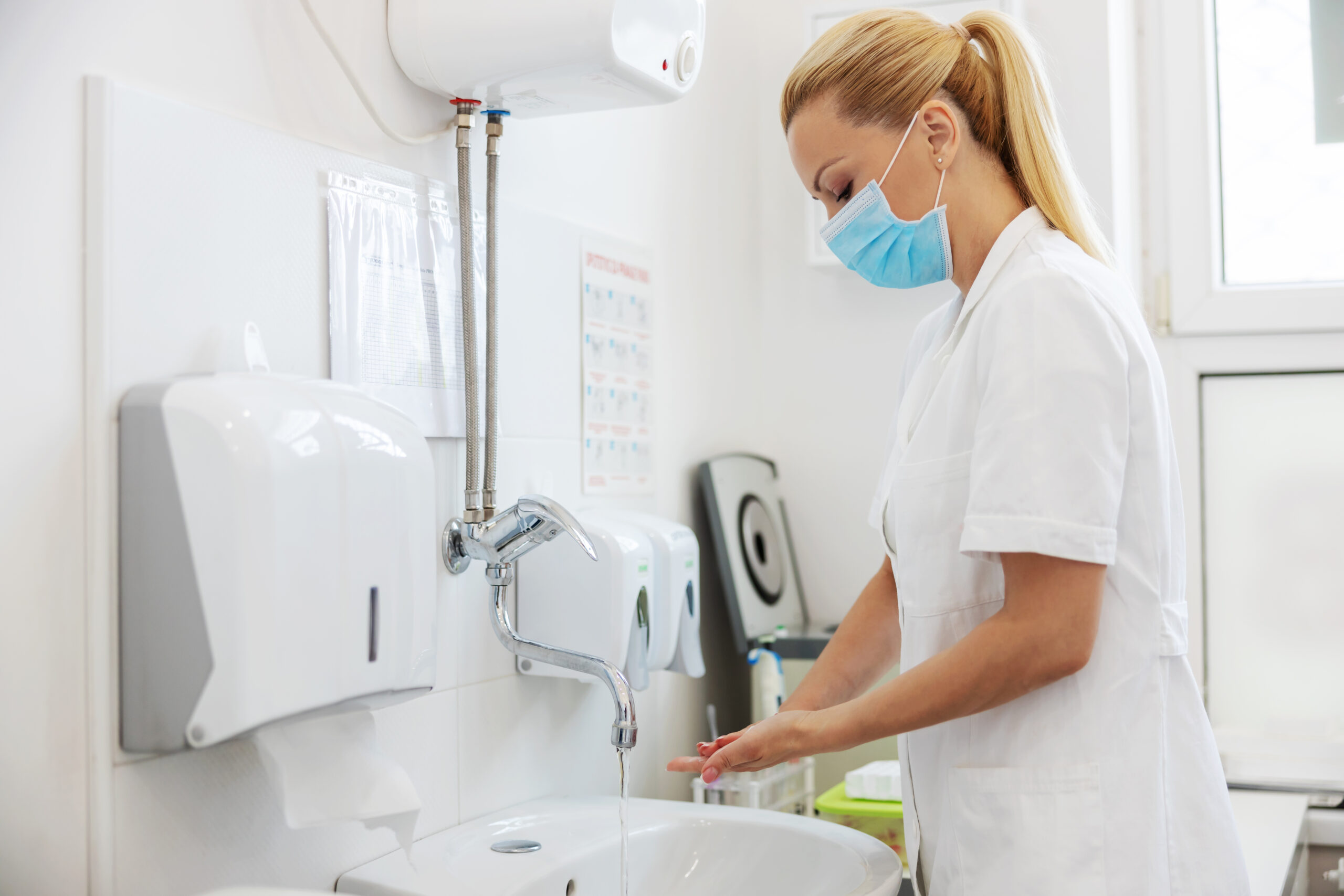
Nosocomial infections are one of the major societal health problems. As the number of hospitalized patients increases, the number of infections increases, leading to higher morbidity and sometimes mortality. Adherence to principles such as maintaining hand hygiene has been shown to be a good measure against the spread of viruses and infections between hospital staff and patients. For this reason, we will pay more attention to how to take care of the cleanliness of your hands.
Clean hands as an effective protection
Good hand hygiene is the responsibility of every member of the hospital team and is an effective protection against the transmission of harmful microbes and infections. To this end, based on current research, analysis and clinical trials, there are standardized rules in medical practice for maintaining hand hygiene. According to the Medical Standard for the Prevention and Control of nosocomial Infections, it refers to four basic sequential steps:
● hand washing;
● hand disinfection;
● prevention of contamination through the use of personal protective equipment;
● hand skin care.
In order to achieve the best result when disinfecting hands with an alcohol-based disinfectant, a certain time for rubbing the product must be observed and standard hygienic techniques must be followed, which will ensure even and complete coverage of all areas of the hands. When cleaning hands with soap and water, the requirements are similar. The washing water must meet a certain safety standard concerning the absence of microbes or other chemical contaminants. Central water is usually used or a solution that is topical and treated with a suitable disinfectant.
In hospitals where contact between patients and healthcare professionals is constant, hand sanitizers should be available. The requirement is to have devices, preparations and auxiliary materials that ensure hand hygiene. Examples are: washbasins with clean running water, soap, disposable paper towels and alcohol-based disinfectants.
Recommendations for hand washing
First, provide a special, large enough place to wash your hands with clean water, a non-contact dispenser with liquid soap, and disposable paper towels. It is extremely important to always clean and disinfect the dispensers completely after washing the soap, after which a new amount of soap should be poured. Once you have the necessary consumables and a place to wash, you need to bare your hands to your elbows. For your convenience, we recommend wearing short-sleeved clothing to significantly reduce the risk of contamination and not have to roll up your sleeves.
When washing your hands with ordinary soap, we advise you to last about a minute, between 40 – 60 seconds, except in case of very heavy soiling. If possible, avoid the use of hot water to minimize the possibility of dermatitis. When washing your hands with an antiseptic, it is a good idea to rub the soap into dry or slightly damp hands for 30 seconds, then add a little foaming water and continue rubbing your hands for another 30 seconds. Finally, rinse thoroughly with water and dry with a disposable towel. If the water jet does not adjust automatically, close the taps with a used towel to avoid contamination of already clean hands.
In our opinion, to prevent contamination of your work clothes or transmission of infection from your hands to it, keep your hands low down in the sink and adjust the water flow smoothly.
Guidelines for hand disinfection
It is advisable to follow a few basic guidelines for hand disinfection after washing them. Before moving on to it, you need to make sure that you do not have jewelry on your hands. It is recommended for those working in a hospital environment to have well-maintained trimmed nails, this will reduce the possibility of contamination. When performing a hand disinfection procedure, the correct amount of detergent is applied and the set time for rubbing all parts of the hands is observed. As before, the skin should be dry, and in cases where it is necessary to wash, which precedes disinfection, follow the above recommendations for hand washing.
During the period of action of the disinfectant product it is necessary to keep the hands wet and if needed, place more of the detergent. An example of a disinfectant specifically designed for hospitals is PaChico AHD. It is a biocide with bactericidal, including tuberculocidal, virucidal (HBV / HIV, Herpes simplex types 1 and 2, Rotavirus), fungicidal action. A certain dosage and exposure must be observed when using the product. It can be applied in the following areas:
● hand hygiene and disinfection;
● surgical disinfection of hands;
● skin disinfection before medical procedures.
Protect your skin
In addition to following the rules for washing and disinfecting hands, another important point in patient care is wearing personal protective equipment such as gloves, a mask or helmet. Otherwise, you may encounter various pathogens, bacteria and infections, endanger your health and that of others. Once you have taken care of the perfect hygiene of your hands, do not forget to regularly apply appropriate cosmetics to keep the skin hydrated with a balanced pH and protected.
To achieve perfect hygiene and disinfection in hospitals, specialized detergents are used, certain administrative standards are followed, and staff undergo additional training to maintain their hands to ensure better hygiene for patients, staff and visitors. Protecting your health and that of others, do not forget what power clean hands can have, and we, from Pachico, will help you in the successful implementation of this mission.